E-Invoice vs E-Way Bill: What's the Difference?
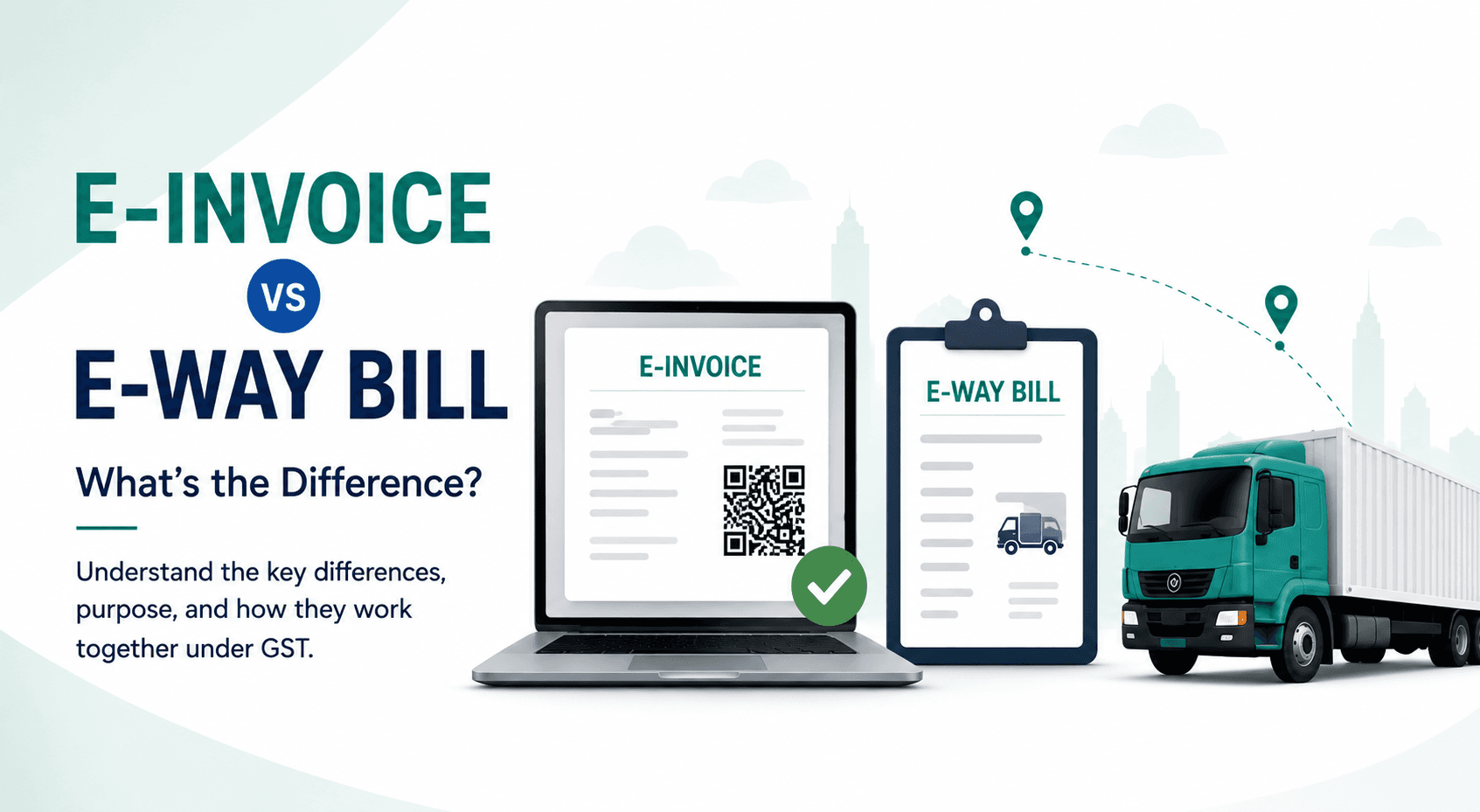
Confused between e-Invoice and e-Way Bill? Learn the key difference , their purpose, applicability, and how they work together under GST. Discover how GST billing software like WaahBooks can simplify invoicing, e-invoice, e-way bill and business management.
E-Invoice vs E-Way Bill: What’s the Difference?
With GST becoming increasingly digital, businesses often come across two important terms: e-invoice and e-way bill.
Although both are related to GST compliance, they serve different purposes. Understanding the difference between e-invoice and e-way bill can help businesses manage their billing and transportation processes more efficiently.
What Is an E-Invoice?
An e-invoice under GST is an invoice that is electronically registered with the authorized Invoice Registration Portal (IRP).
When an eligible business generates an e-invoice, the required invoice details are submitted to the IRP. After successful validation, an Invoice Reference Number (IRN) and digitally signed QR code are generated.
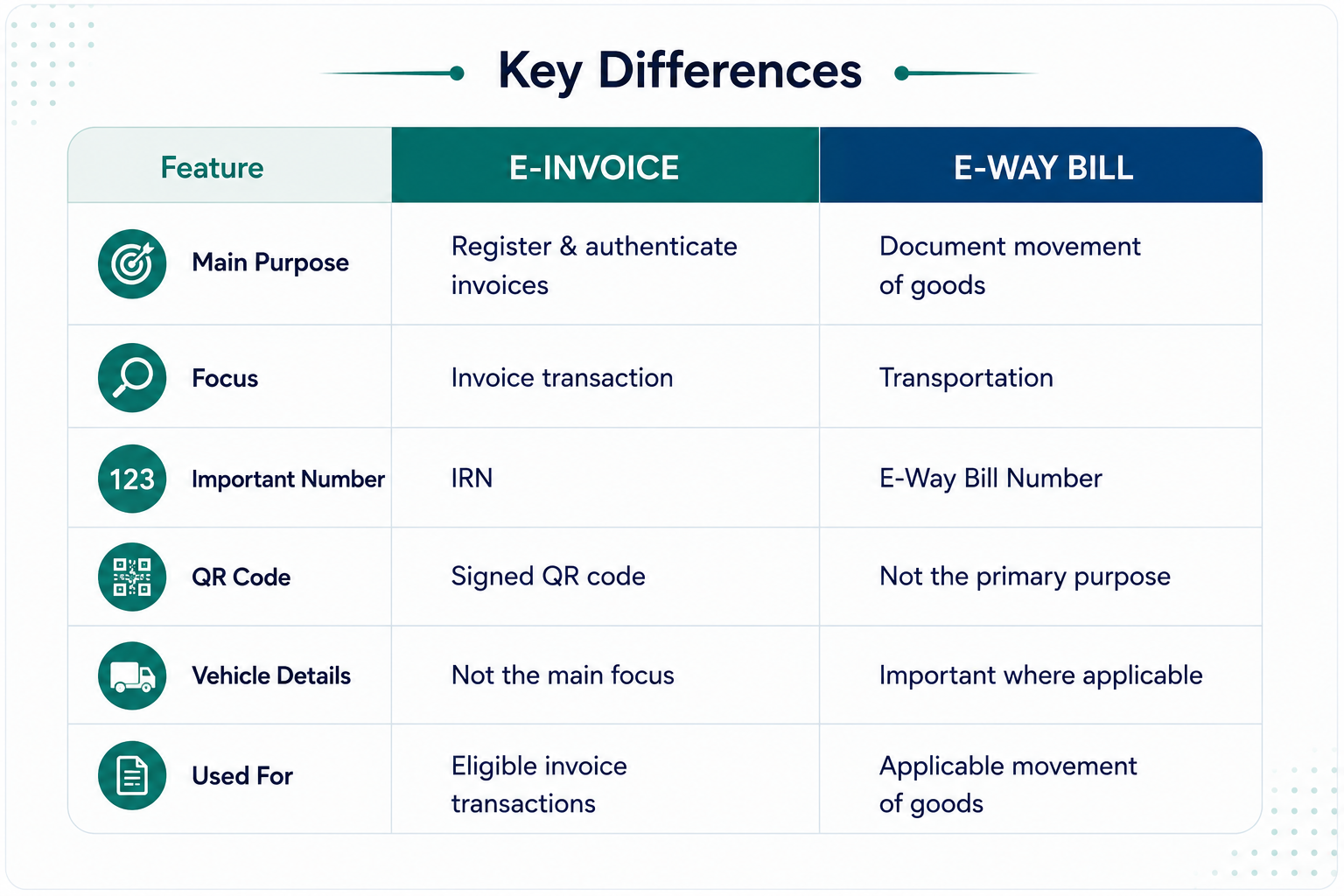
An e-invoice mainly focuses on the invoice transaction and its authentication.
An e-invoice generally contains details such as:
Supplier and customer information
Invoice number and date
HSN codes
Taxable value
GST details
Total invoice value
What Is an E-Way Bill?
An e-way bill is an electronic document required for the movement of goods when the applicable GST conditions are met.
Unlike an e-invoice, an e-way bill primarily focuses on the movement and transportation of goods.
It may contain information such as:
Invoice details
Supplier and recipient details
Goods information
Transporter details
Vehicle number, where applicable
Mode of transportation
E-Invoice vs E-Way Bill: Key Differences
How Are E-Invoice and E-Way Bill Connected?
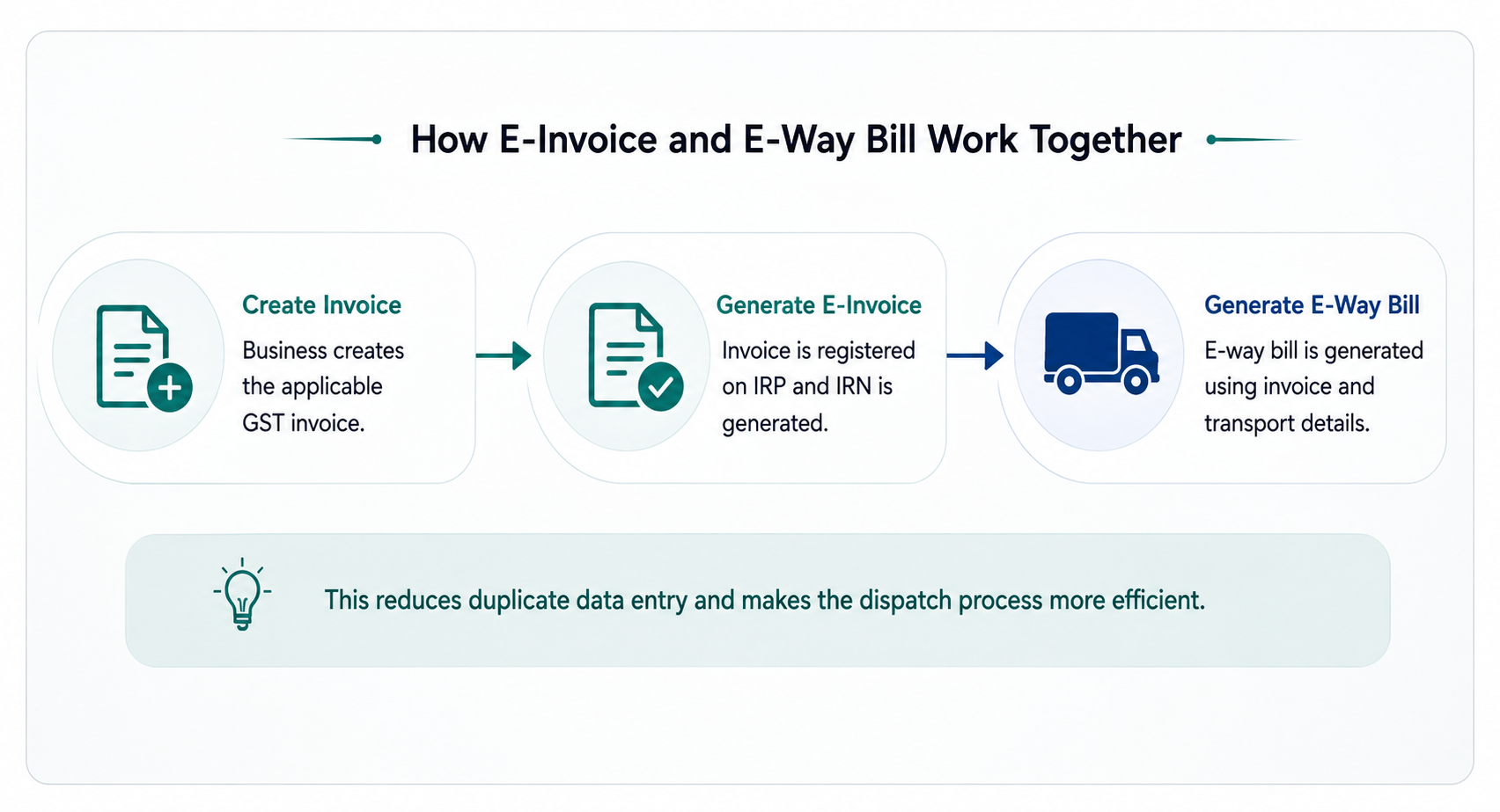
Although they have different purposes, e-invoice and e-way bill can work together.
When an eligible invoice is registered, its details can be used to generate an e-way bill. Transportation information can then be added to complete the e-way bill process.
For example, suppose a wholesaler sells goods to a distributor.
Step 1: Create the GST Invoice
The business creates the applicable GST invoice with the required invoice and tax details.
Step 2: Register the E-Invoice
If e-invoicing is applicable, the invoice details are submitted through the IRP and an IRN is generated.
Step 3: Generate the E-Way Bill
When the goods are transported, the applicable e-way bill is generated using the invoice details along with the required transportation information.
This integration can reduce duplicate data entry and make the dispatch process more efficient.
Do You Always Need Both?
No.
Whether a business needs an e-invoice, e-way bill, or both depends on the applicable GST requirements, the taxpayer's circumstances and the nature of the transaction.
Therefore, businesses should always check the latest official GST requirements before deciding whether a particular transaction requires an e-invoice, an e-way bill, or both.
Common Mistakes to Avoid
Businesses should avoid these common mistakes when managing e-invoices and e-way bills:
Treating an e-invoice and e-way bill as the same document
Entering incorrect GSTIN or invoice information
Entering incorrect transportation or vehicle details
Relying on outdated GST information
Manually entering the same information into multiple systems
Failing to verify invoice and transportation details before dispatch
Using integrated GST billing software can help reduce repetitive data entry and improve the accuracy of GST-related processes.
How WaahBooks Can Help
Managing GST invoices, e-invoices, e-way bills and inventory separately can become time-consuming as your business grows.
WaahBooks brings GST billing, accounting, inventory and e-invoice/e-way bill workflows together in one cloud-based platform.
With features such as:
GST billing
E-invoice and e-way bill management
Inventory management
Multi-user access
Business reports
GST-related reporting
WaahBooks helps businesses manage their daily billing and business operations from one place.
Instead of switching between multiple systems and repeatedly entering the same information, businesses can streamline their workflow and reduce manual effort.
E-Invoice vs E-Way Bill: Quick Summary
The easiest way to remember the difference is:
E-Invoice → Deals with the invoice
E-Way Bill → Deals with the movement of goods
They are different documents, but they can work together as part of a business's GST workflow.
Conclusion
Understanding the difference between e-invoice and e-way bill is important for businesses that deal with GST billing and the movement of goods.
An e-invoice primarily deals with the authentication and reporting of eligible invoices, while an e-way bill focuses on the movement and transportation of goods.
Depending on the applicable GST requirements, a business may need an e-invoice, an e-way bill, or both.
With the right GST billing software, businesses can simplify billing, reduce repetitive manual work and manage GST-related processes more efficiently.
Looking for an easier way to manage GST billing and business operations? Explore WaahBooks today.